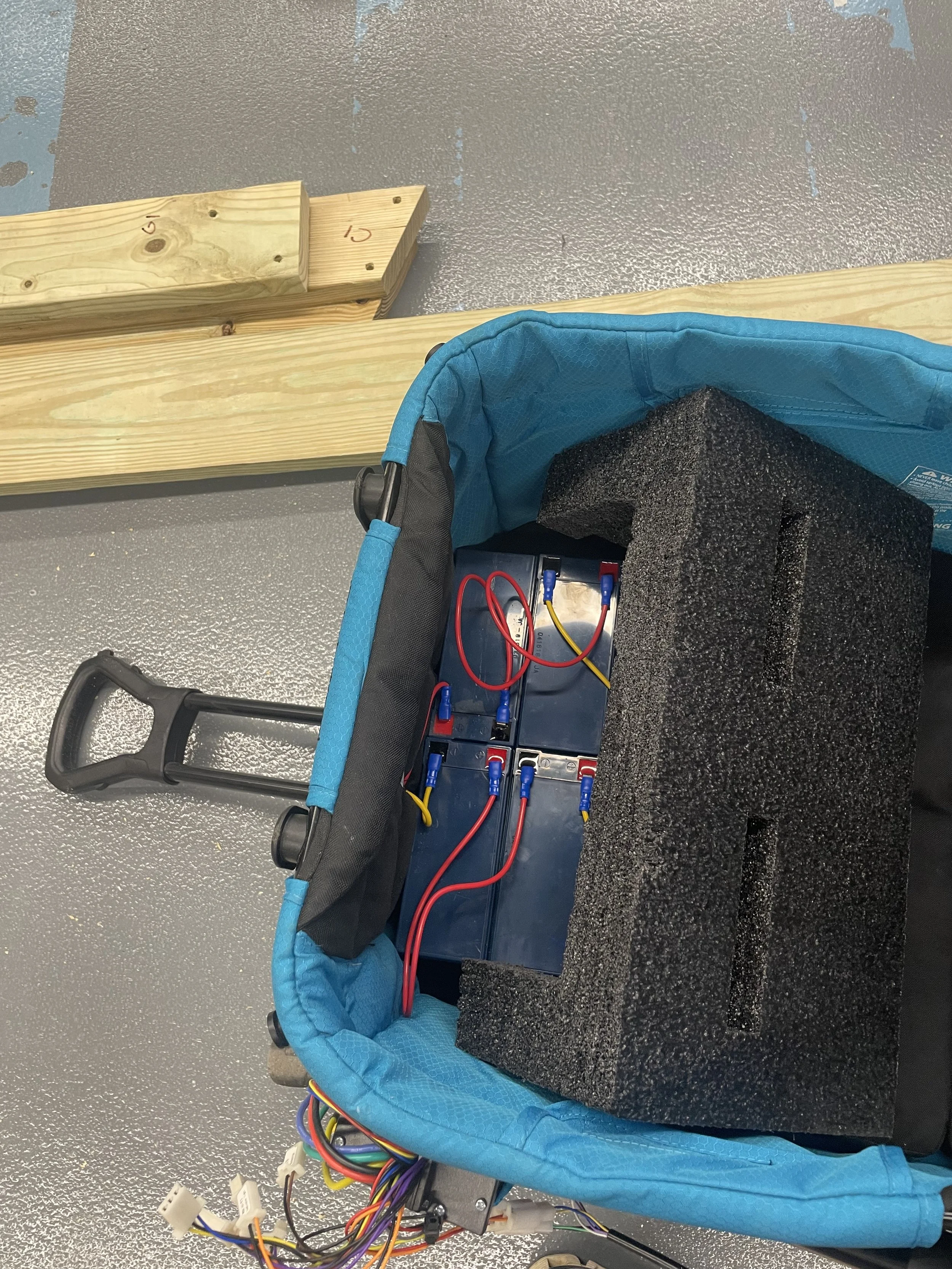
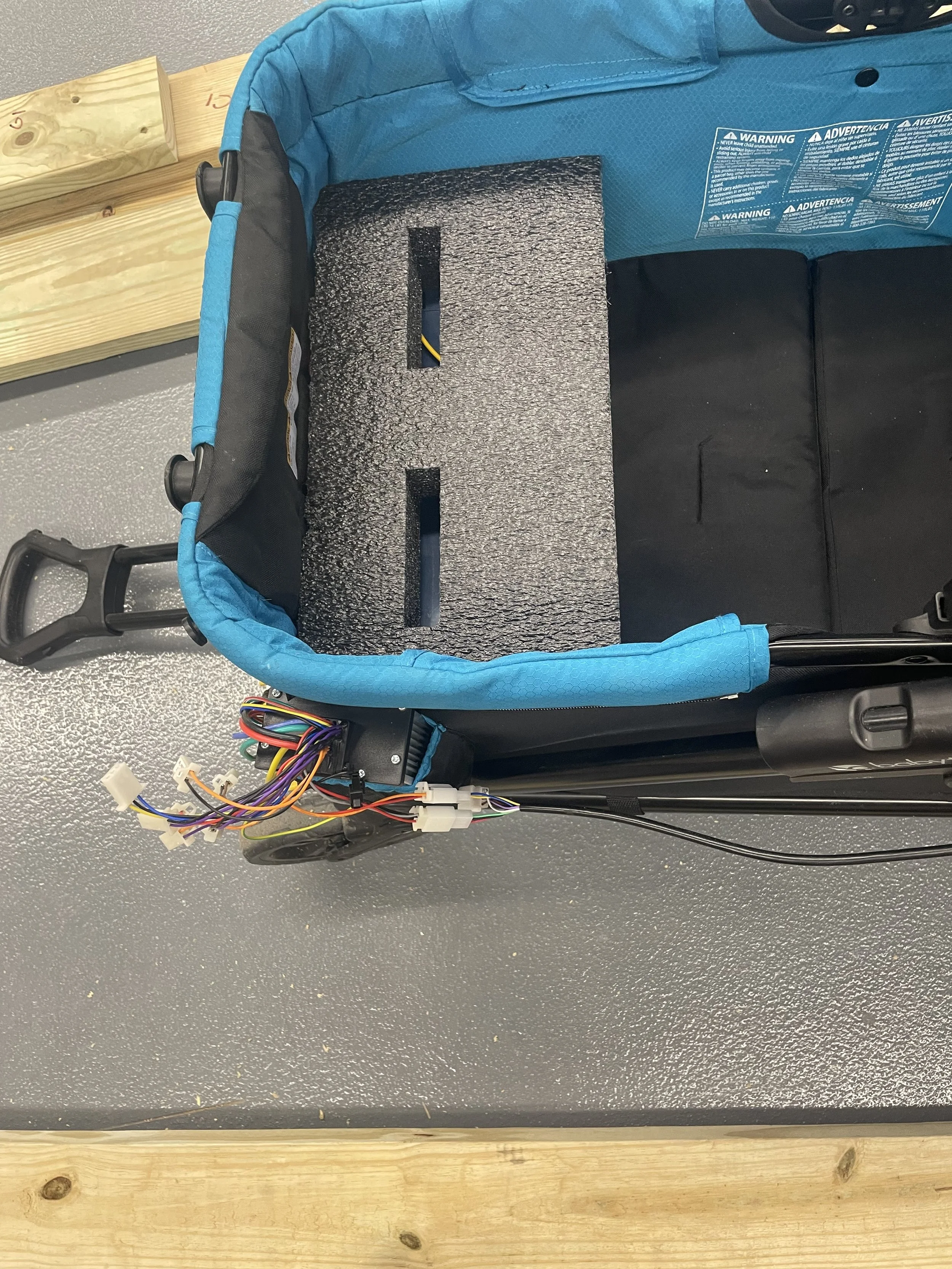
Video of second iteration of the project
Motorized Stroller assist
The Idea:
This project began as a request from my school advisor who was looking for ways to move her kid around our hilly campus more easily. My mind, always searching for ways to attach motors to things, jumped at the opportunity to develop my own unique powertrain and help my teacher. The main design constraints were working with the materials already available in our maker space and making the system as unintrusive as possible, leaving no permanent damage on the stroller if the system was taken off.

The Process:
I went through three main design iterations:
Idea 1: Attach a 5th powered wheel directly driven by a motor to the bottom of the carriage and use springs to load it into the ground. Pros: Simple design, no modifications necessary to frame. Cons: Not enough force from available springs to create enough friction to drive stroller forward, unstable design.
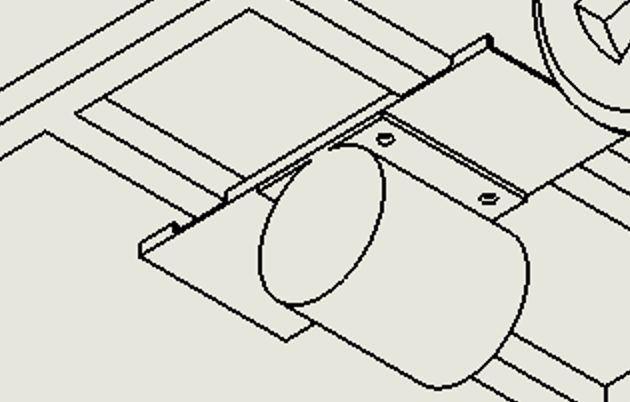
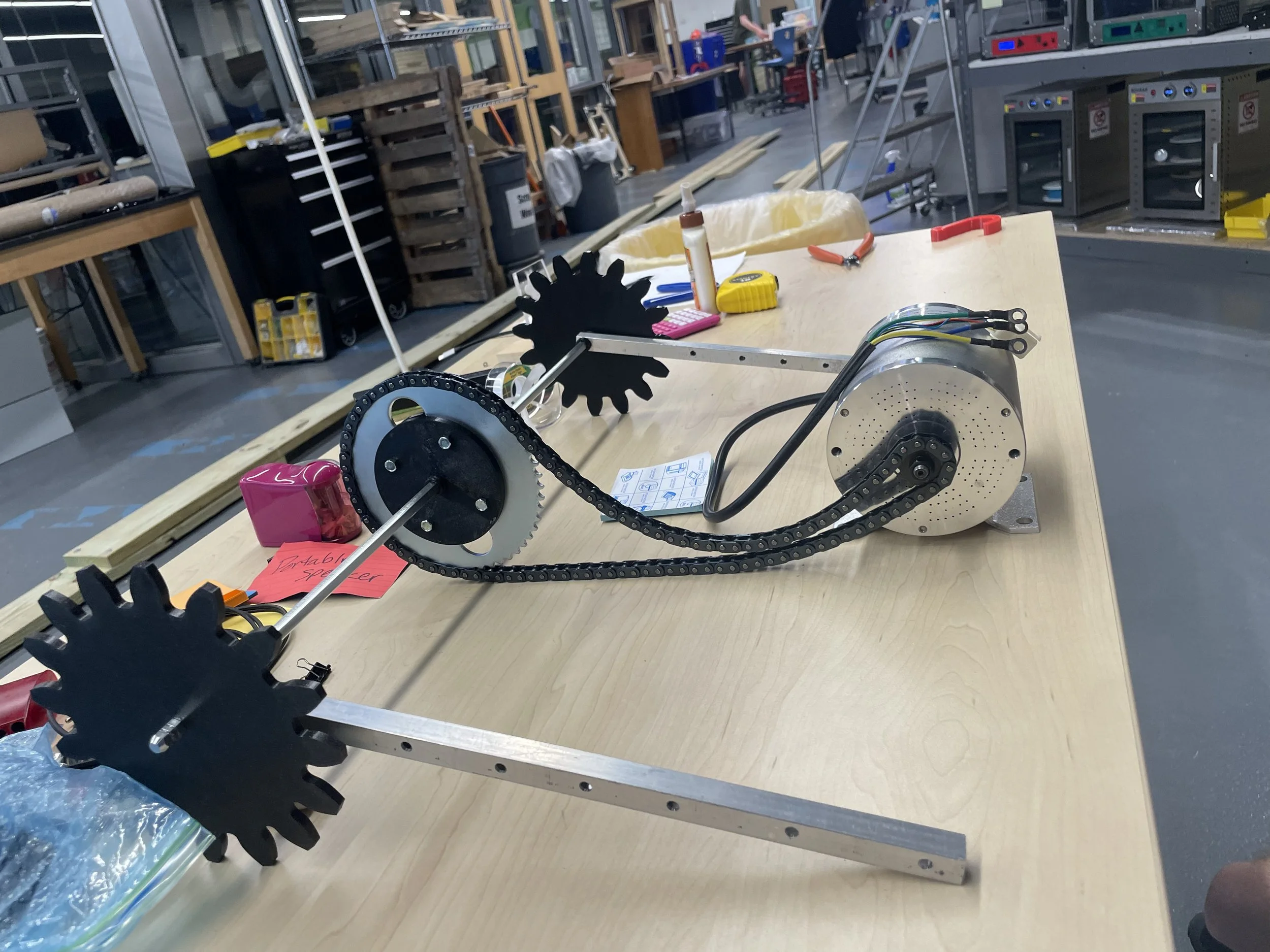
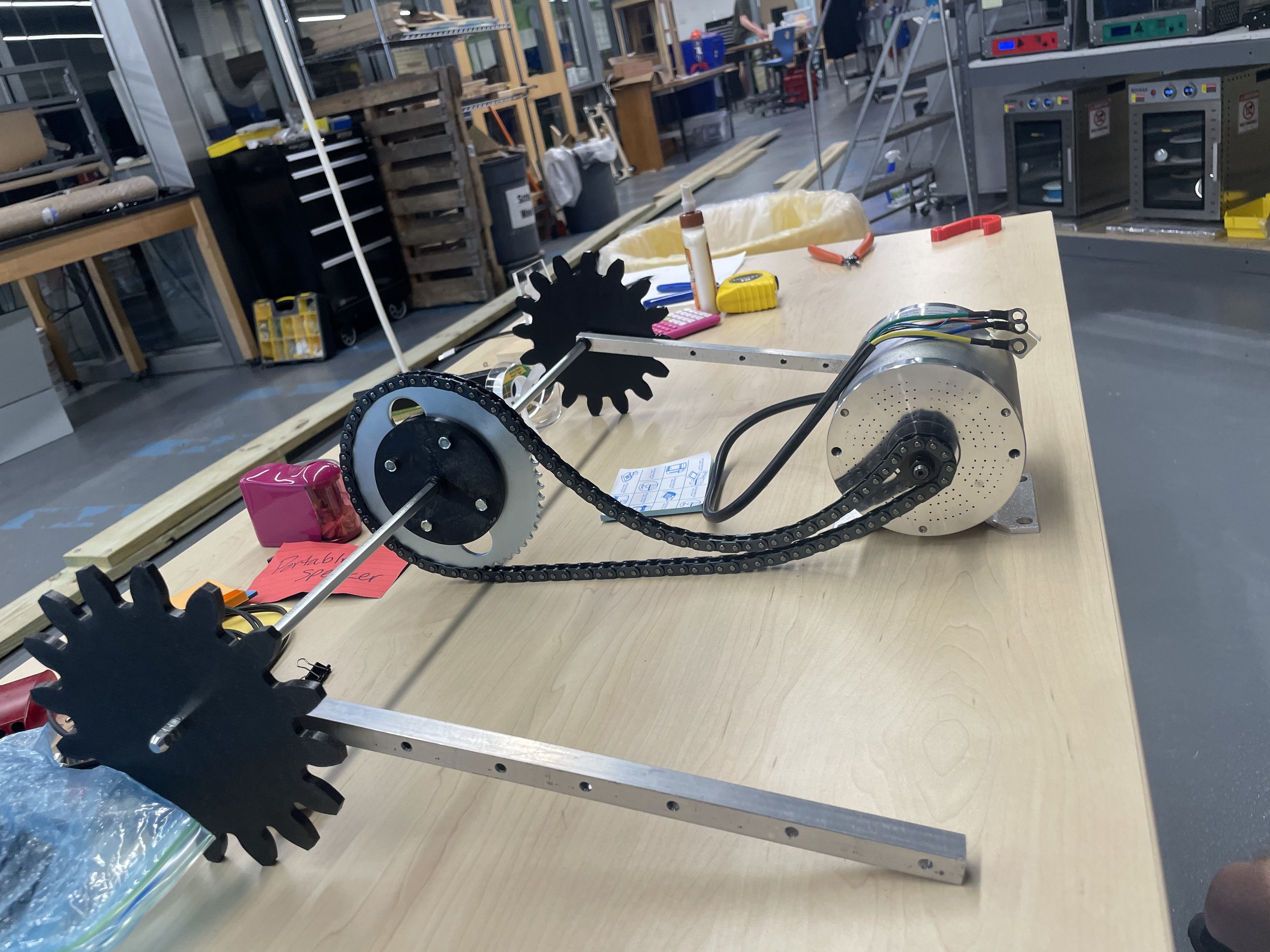
Idea 2: Learning from the previous design, I used 3D printed sprockets and gear hubs to transmit power from a larger motor mounted underneath the frame to the existing wheels. Pros: Better power transmission than before, more stable design. Cons: Bulky design limited other capabilities of stroller (i.e., folding). Filament available was too soft and was easily shredded by the powerful motor.
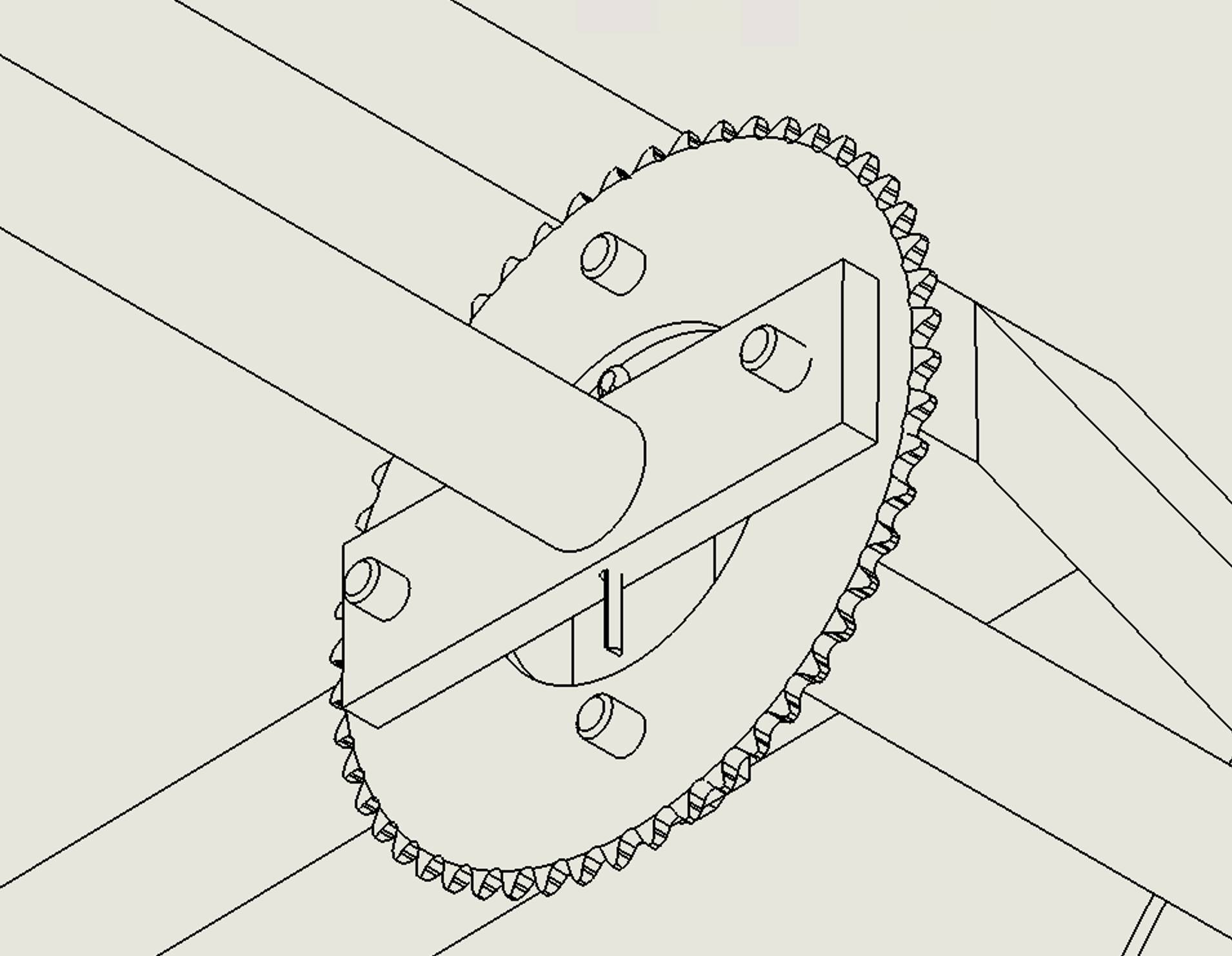
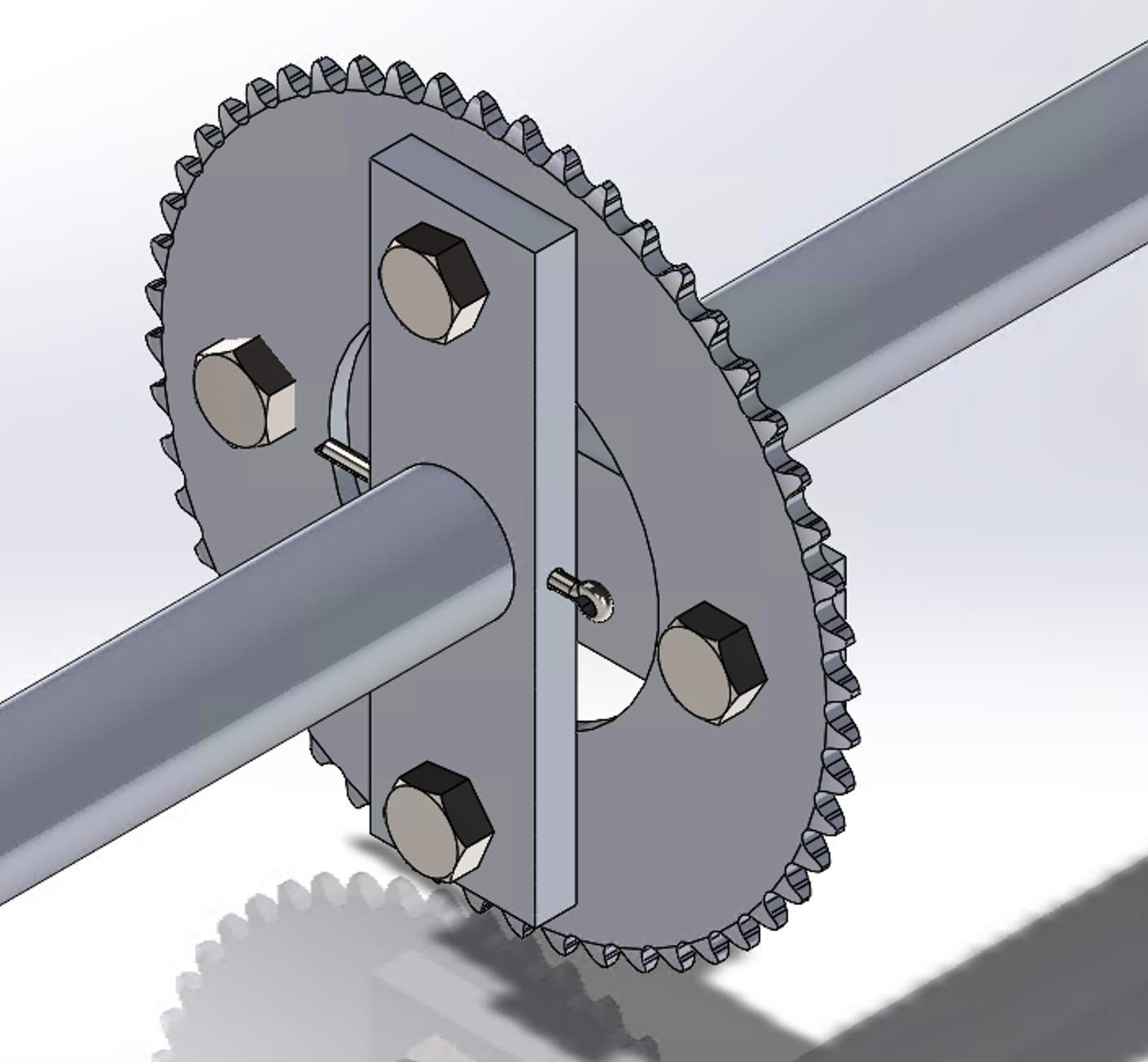
Idea 3: Deciding to streamline the design, I completely restructured the rear end of the stroller, adding in a solid axle and attaching the sprockets and wheels directly with metal pins and plates. Pros: Best power transmission, providing instant and stable power to the rear wheels. Streamlined design allows stroller to be folded and used as intended. Cons: Some modifications had to be made to the stroller itself.
The Result:
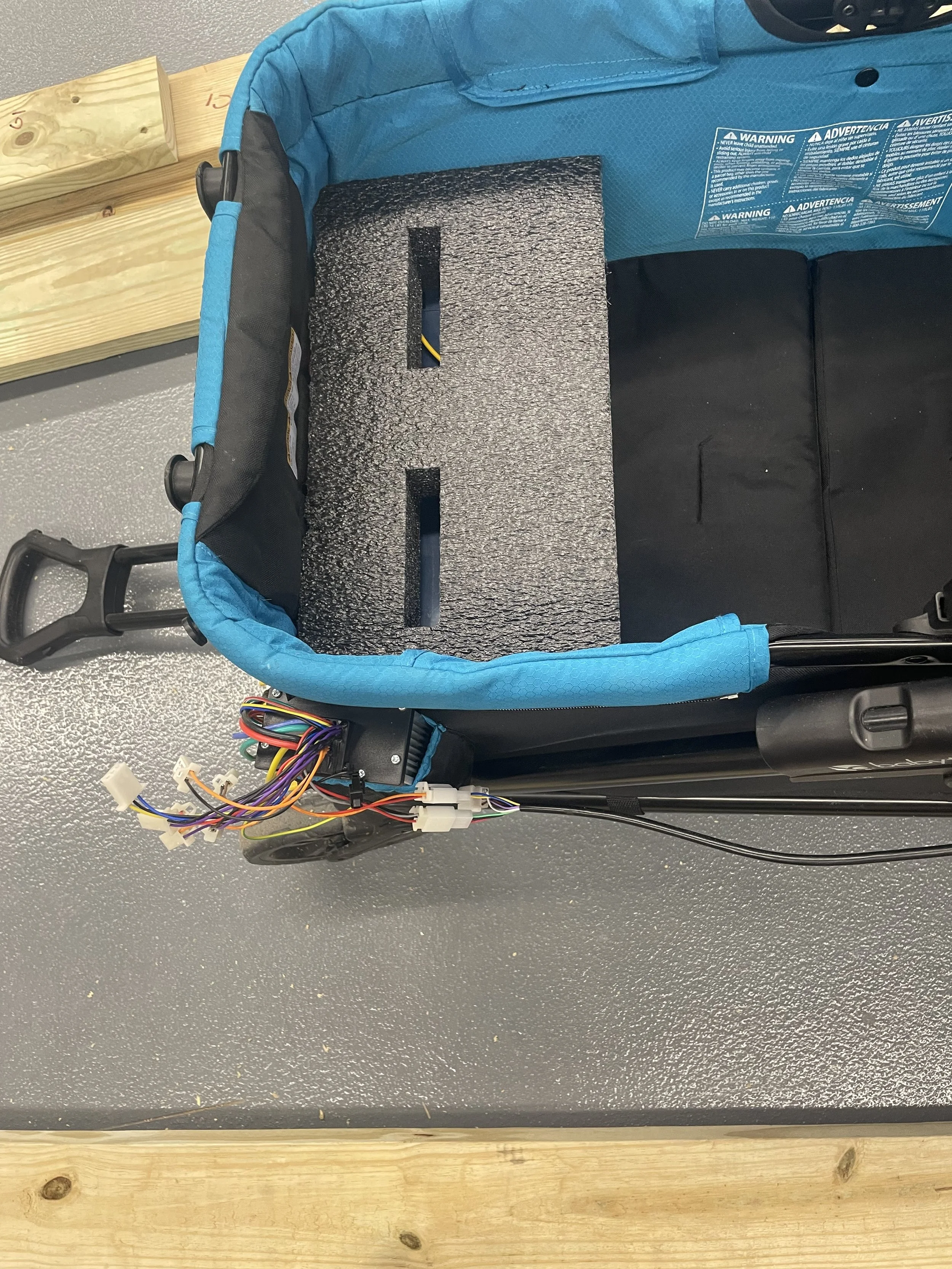
While I was forced to slightly modify the carriage, which was against my initial parameters, the final design is strong, unintrusive, and powerful, thereby meeting all of the constraints I set out for the project. Future designs could include regenerative systems where manually pushing the stroller or letting it go down hills would recharge the batteries.